
From Passive Viewers to Paying Participants: The New Economics of Live Streaming
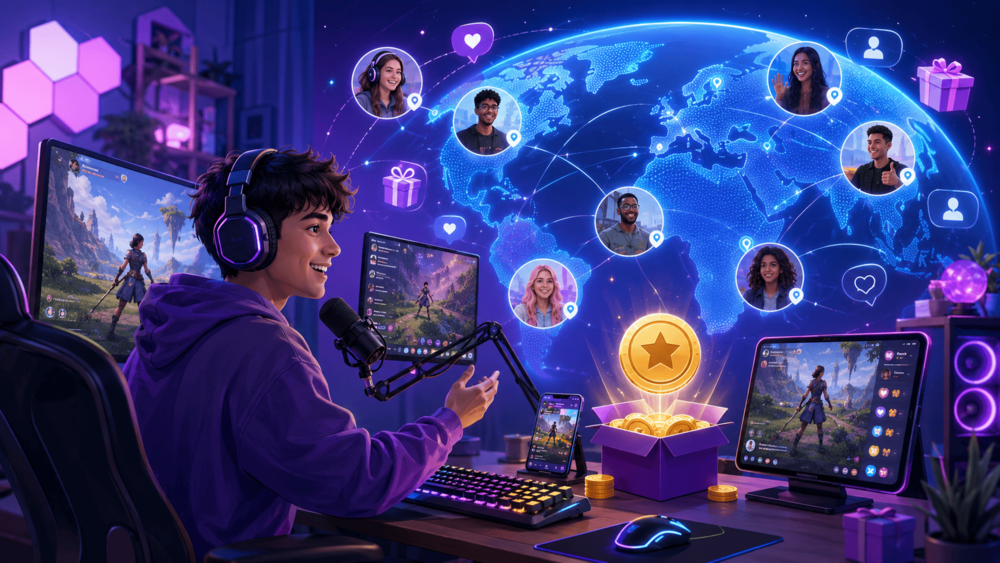
Why participation-based monetization can outperform passive donation prompts
Live-stream monetization is moving beyond the traditional tip button. In May 2026, Twitch introduced and expanded features designed to make financial support part of the entertainment itself. Creator Badge Drops, Custom Power-ups and new Hype Train formats all follow the same principle: viewers are more likely to spend when spending creates a shared moment, status or influence over the stream.
Why Participation Converts Better Than a Static Donation Request
A static donation prompt asks a viewer to leave the entertainment experience and make a separate financial decision. Interactive monetization does the opposite. It embeds support inside the show. A viewer can unlock a limited badge, trigger an on-screen effect, influence the creator's next action or help the community reach a collective goal.
Twitch reported that more than one-third of viewer spending goes toward Hype Trains. The platform also said creators testing custom event badges saw up to 50% more gift-subscription revenue on the first day of an event compared with their monthly average. Those figures do not guarantee the same result for every channel, but they show why platforms are investing in participation mechanics.
Status, Influence and Collective Momentum
The strongest live monetization features usually deliver one of three benefits. The first is status: a badge proves that a viewer was present for a milestone. The second is influence: a paid Power-up can change what happens on screen. The third is collective momentum: many viewers contribute toward a shared target, making support feel like a team activity rather than an individual transaction.
These motivations are more emotionally compelling than a generic request for money. They also create content. A successful Power-up produces a reaction, a Hype Train creates urgency and a limited badge gives viewers something to discuss after the broadcast. Monetization therefore becomes part of engagement and discovery rather than a layer placed on top of them.
How Creators Can Design Better Interactive Revenue
Creators should begin with the entertainment value of the interaction. A Power-up should create a moment that is visible, understandable and enjoyable even for viewers who do not pay. Examples include allowing the audience to select a game mode, add a temporary challenge, activate a sound effect or choose the next discussion topic.
Pricing should reflect frequency and impact. Low-cost interactions can be repeatable, while higher-priced actions should feel rare and meaningful. Creators also need boundaries. Any feature that disrupts gameplay too often, creates moderation problems or pressures viewers can damage trust. The objective is voluntary participation, not constant urgency.
What Brands and Platforms Can Learn
The same model can support sponsorships. A game publisher could fund a community challenge, reward viewers with a branded badge or let the audience unlock a playable demo after reaching a goal. These formats are more native to livestreaming than interruptive advertising because the viewer participates rather than merely watches.
For platforms, interactive monetization can increase both creator earnings and audience retention. For creators, it offers a path to revenue that does not depend entirely on ad impressions. The most valuable asset is not simply the size of the audience, but the strength of the audience's willingness to act together.
Designed Like a Game Loop
The next phase of live-stream revenue will be designed like a game loop: clear triggers, visible progress, meaningful rewards and social feedback. Creators who make support entertaining can generate revenue without turning the stream into a sales pitch.